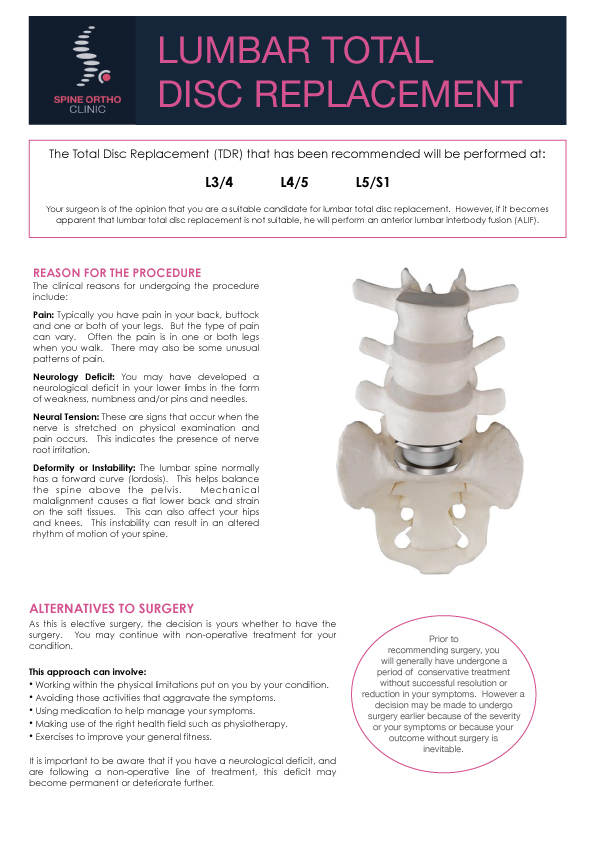
Lumbar Total Disc Replacement
The damaged disc in the lower back is replaced with an artificial disc that maintains natural spinal motion. Preserves flexibility and can reduce the risk of adjacent-level wear compared with fusion.
Posterior Spinal Fusion
Two or more vertebrae are joined from the back of the spine using screws and bone graft, guided by robotic navigation. Stabilises the spine and relieves pain caused by instability or deformity.
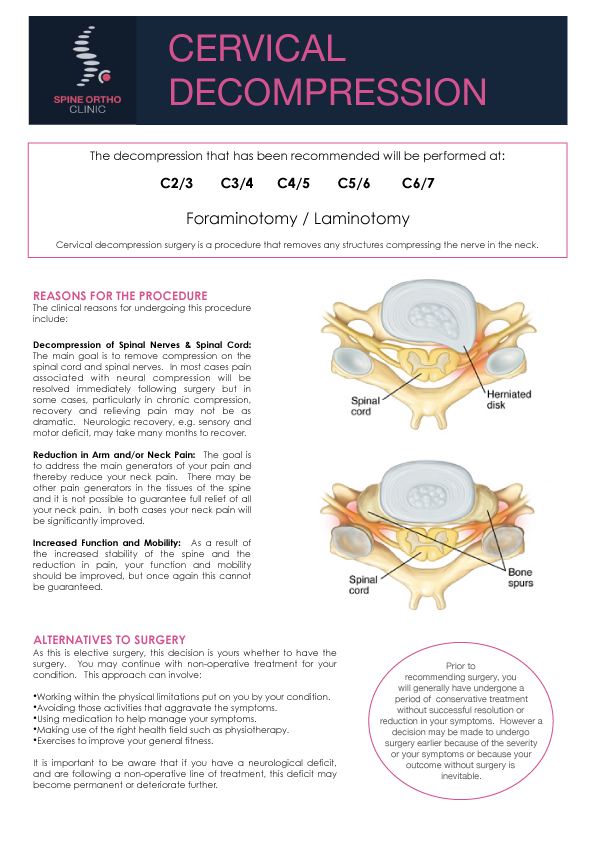
Lumbar Decompression
Bone spurs or ligament overgrowth pressing on the spinal nerves are removed through a keyhole approach. Relieves leg pain, numbness and walking difficulty caused by spinal stenosis.
Anterior Lumbar Interbody Fusion
The damaged disc is removed and replaced with a spacer through a small incision in the abdomen, avoiding the back muscles entirely. Restores disc height and alignment while allowing a faster, less painful recovery.
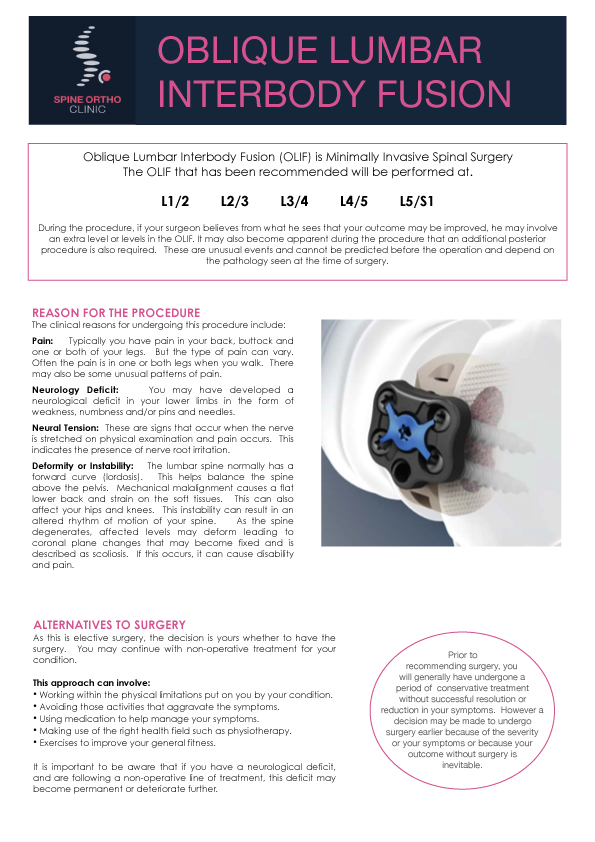
Oblique Lumbar Interbody Fusion
The disc is accessed through a small incision at an angle between the abdominal muscles, sparing muscle and bone. A minimally invasive fusion that restores height and corrects alignment with minimal blood loss.
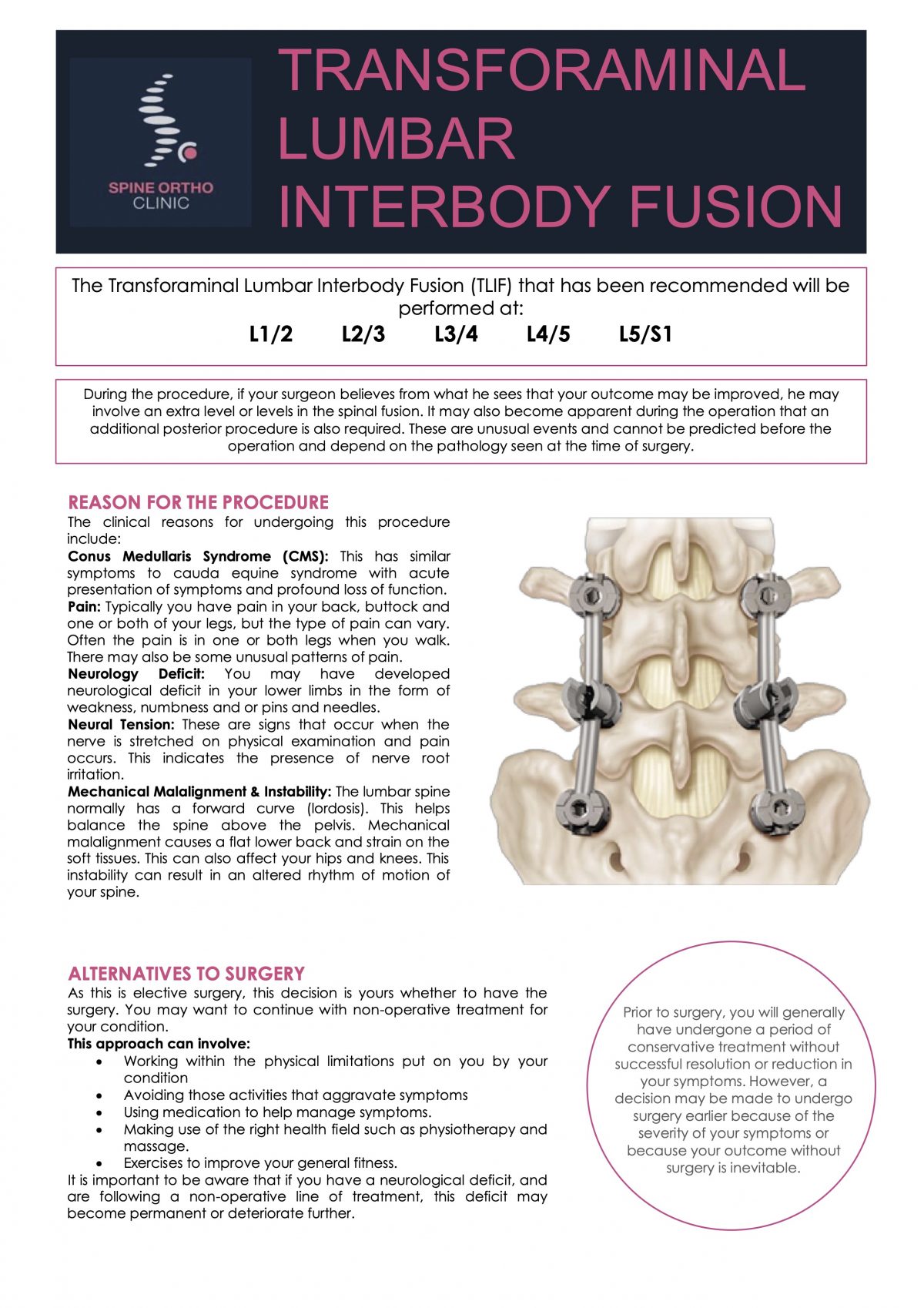
Transforaminal Lumbar Interbody Fusion
The damaged disc is removed and a spacer inserted through a single small opening at the back of the spine. Combined with screws for a solid fusion, typically used for spondylolisthesis and degenerative disc disease.